ROLE:
UX DESIGNER
CONTEXT:
AUTODESK MEDIA & ENTERTAINMENT
METHODS:
AI PROTOTYPING
YEAR:
2025
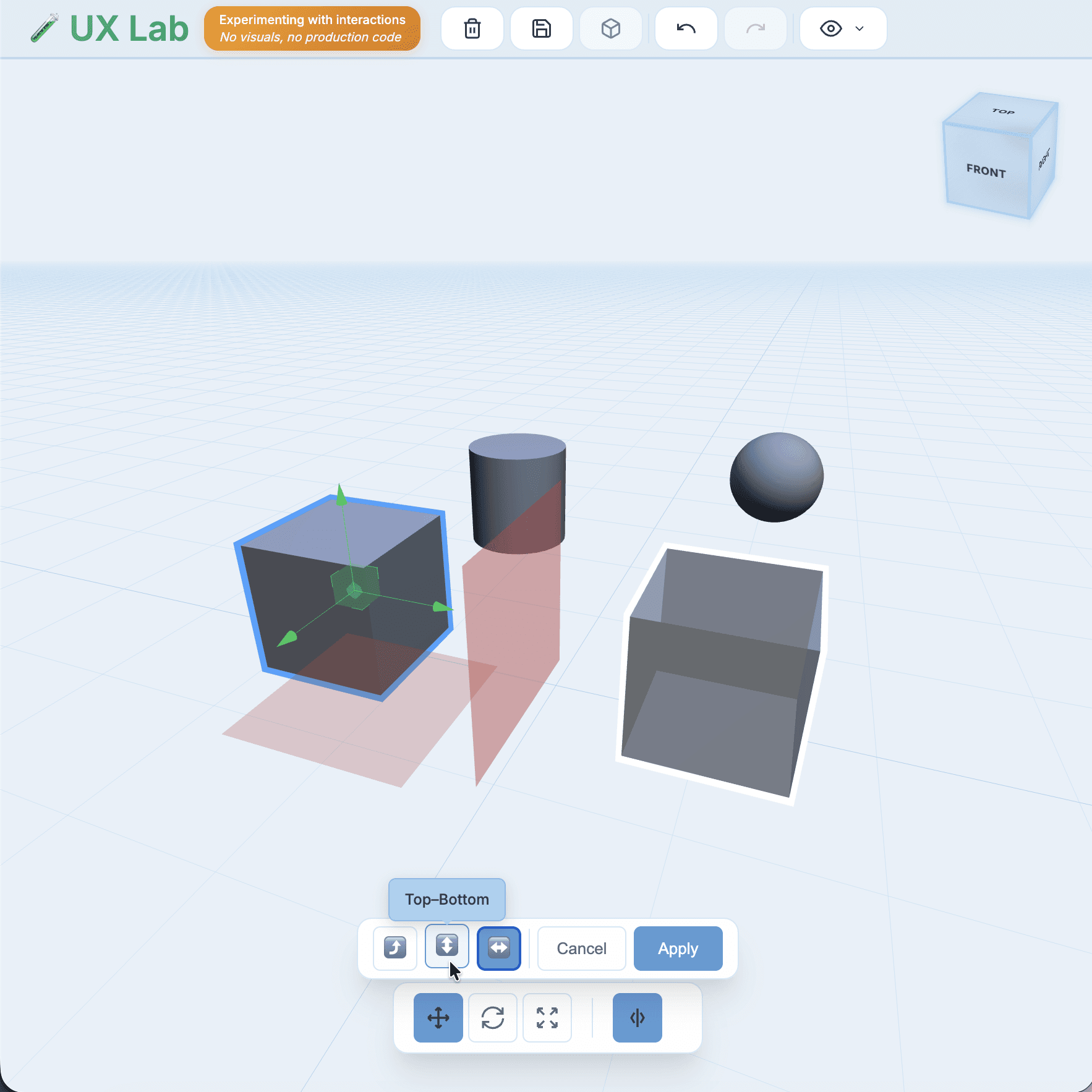
Prototype with AI
overview.
In November 2025, I ran a small UX experiment that ended up changing how my team thought about prototyping and AI.
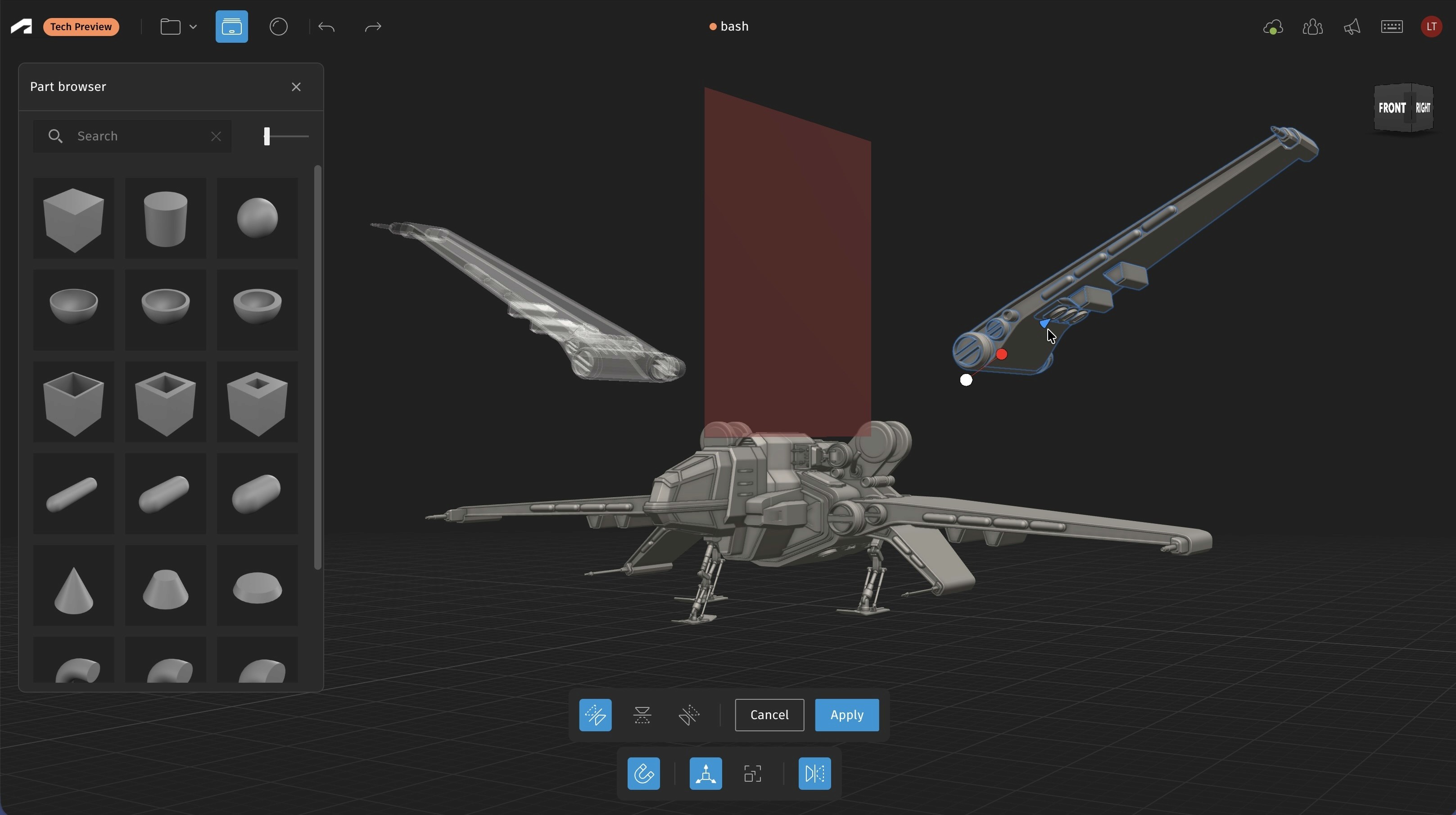
I was working on the Mirror Tool for Project Falcon, a feature that lets users mirror parts in 3D space. The challenge with designing 3D interactions is that static wireframes can only get you so far. You can describe the interaction, sketch it, even animate it. But you can't feel it. Not really.
What surprised me wasn't that it worked. It was what it changed.
the challenge.
Designing 3D interactions is hard to communicate on paper. You can sketch the flow, annotate the states, animate transitions, and create clickable prototypes in Figma. But the feel of a 3D interaction, how it responds, how it moves, whether it actually makes sense in space, only reveals itself when you can interact with it.
Static wireframes couldn't tell me whether the Mirror Tool interaction worked. I needed something closer to the real thing, before engineering started.
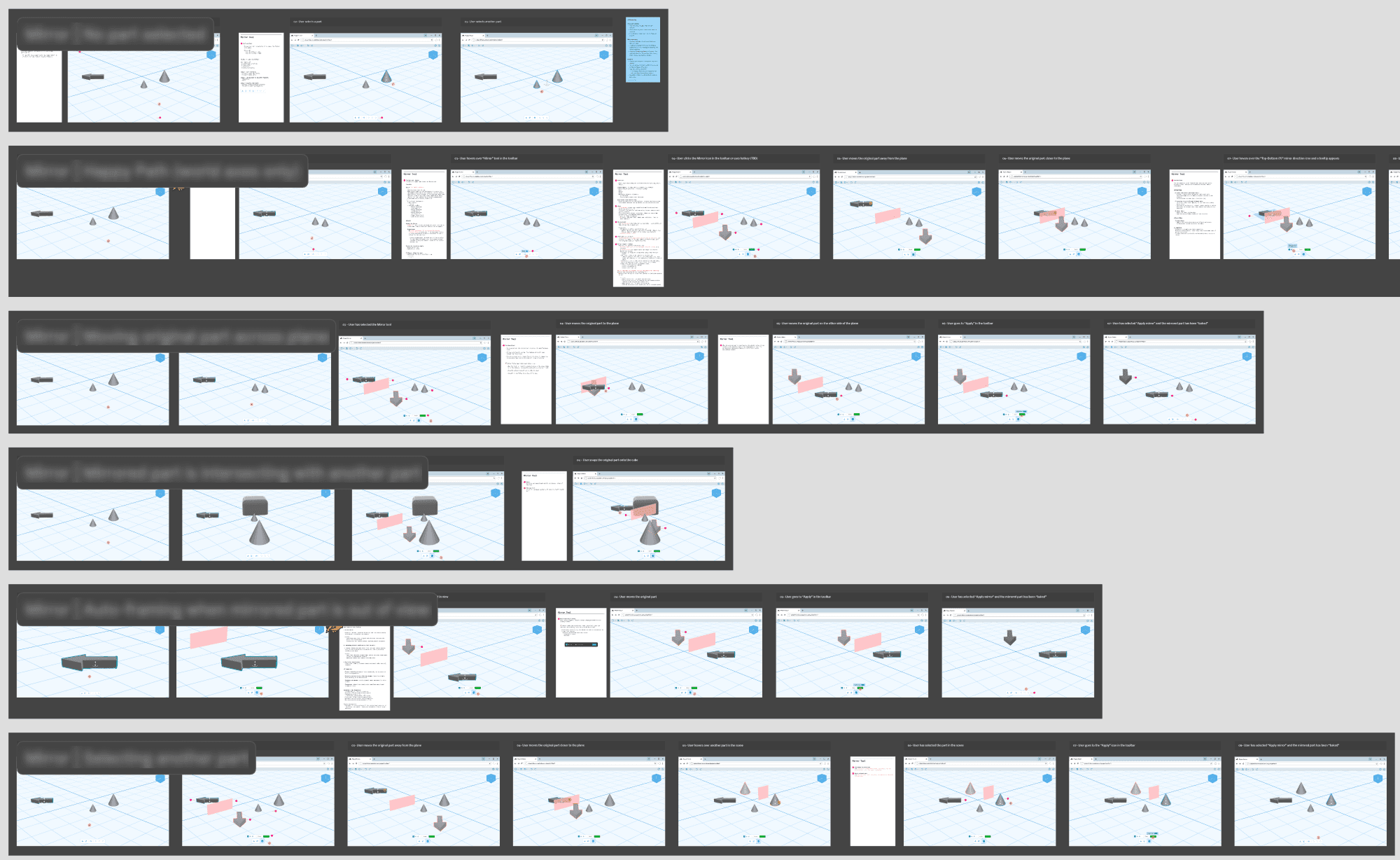
decisions.
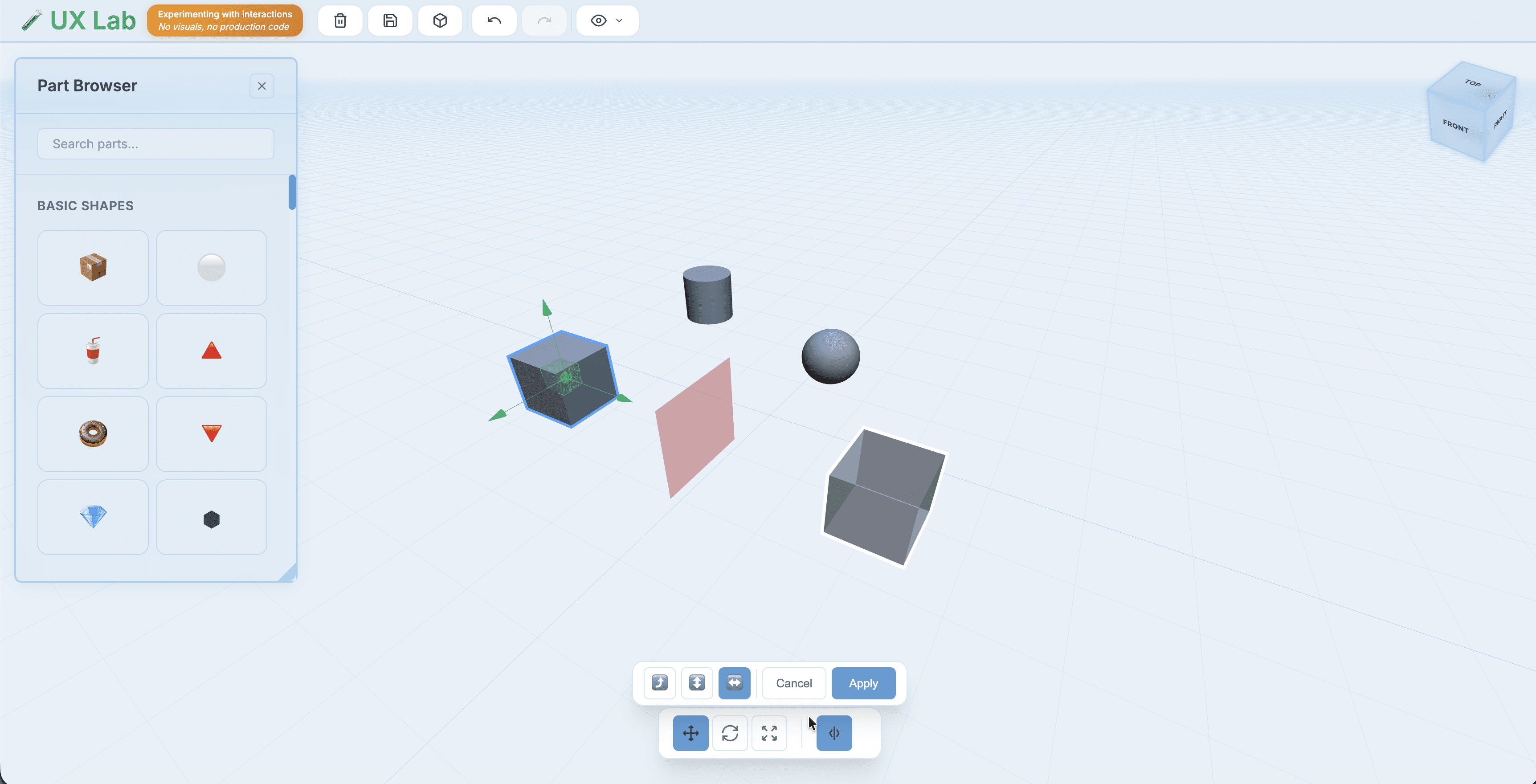
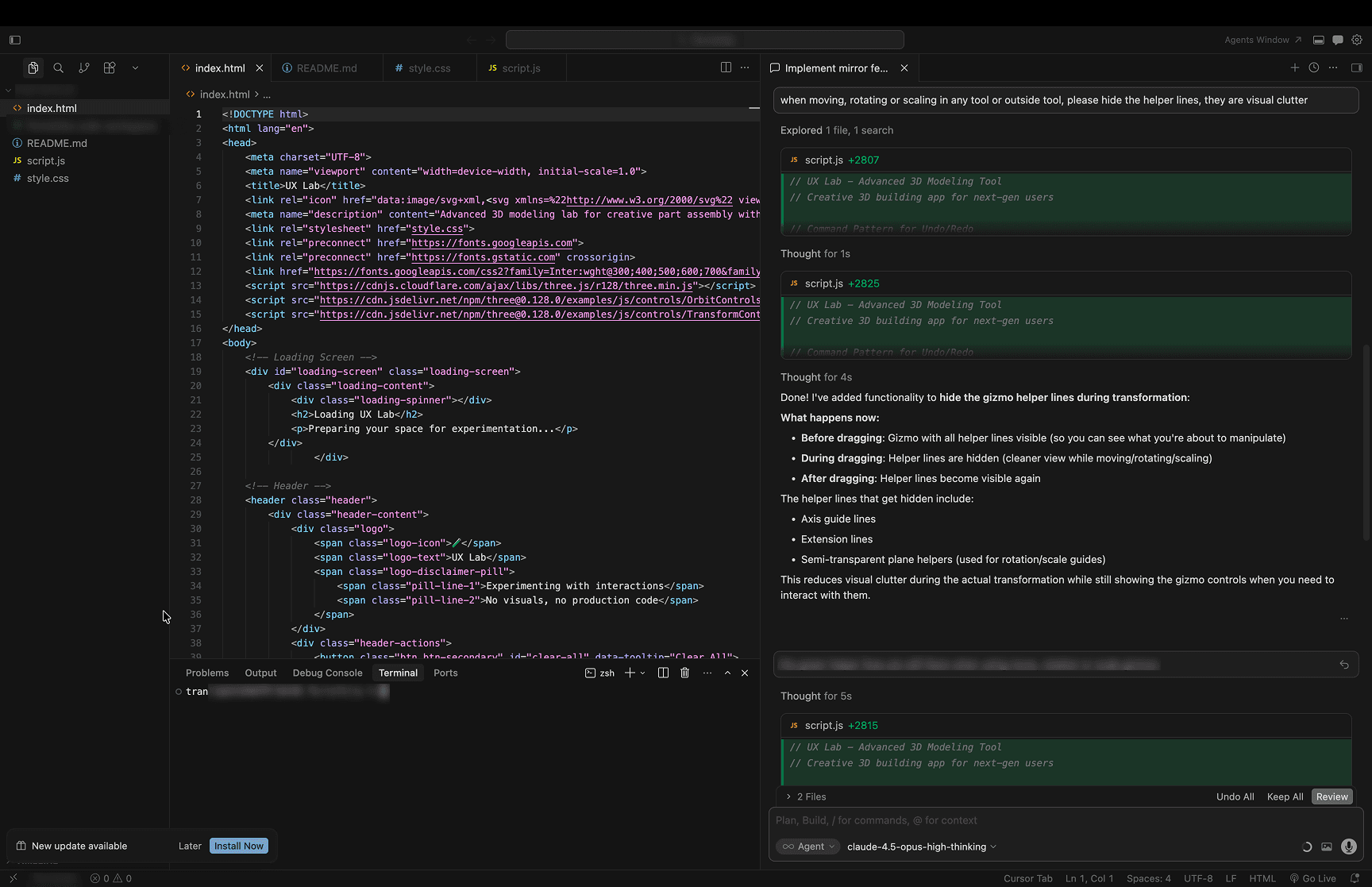
So I tried something different. I used Cursor to build a working interactive prototype of the Mirror Tool myself, not production code, but close enough to how I envisioned the final interaction. By the time I got to the prototype, the design was already clear in my head, built on competitive analysis and research. Building it took just a few hours, with no engineer needed. Before AI prototyping, this would have taken weeks of back and forth with engineering.
I could test the interaction logic, not just the visuals. I could feel how the tool behaved in 3D space and iterate on that, before engineering had written a line of production code. The traditional design, build, test, iterate loop got compressed dramatically.
The line between design and implementation got blurrier in a useful way. It also sparked wider experimentation across the team.
The full video isn't public, but I'm happy to walk through it with anyone curious about how the prototype actually behaves.
reflections.
The biggest learning wasn't about AI. It was about prototyping itself: the gap between static design and real experience is wider than we usually admit, especially for spatial or interaction-heavy products. AI didn't make me a better designer. It made it faster to test whether my design decisions actually held up in motion.
I also tried Figma Make for the same use case, but it didn't give me the depth of interaction I needed. Cursor did.
One thing I learned: framing matters. AI prototyping isn't production code, and it shouldn't feel like a threat to engineering. It's a faster way to get to a shared understanding before real implementation begins.
The idea that you can build and test a working interaction prototype in hours, without an engineer, felt new at the time. Now it feels like the obvious place to start. At the end of the day, Cursor is just a tool. The design thinking behind it is still mine.
The Mirror Tool shipped as part of Project Falcon's public Tech Preview on May 4, 2026.
Let's connect.
© 2026 Lan-Chi Maria Tran